
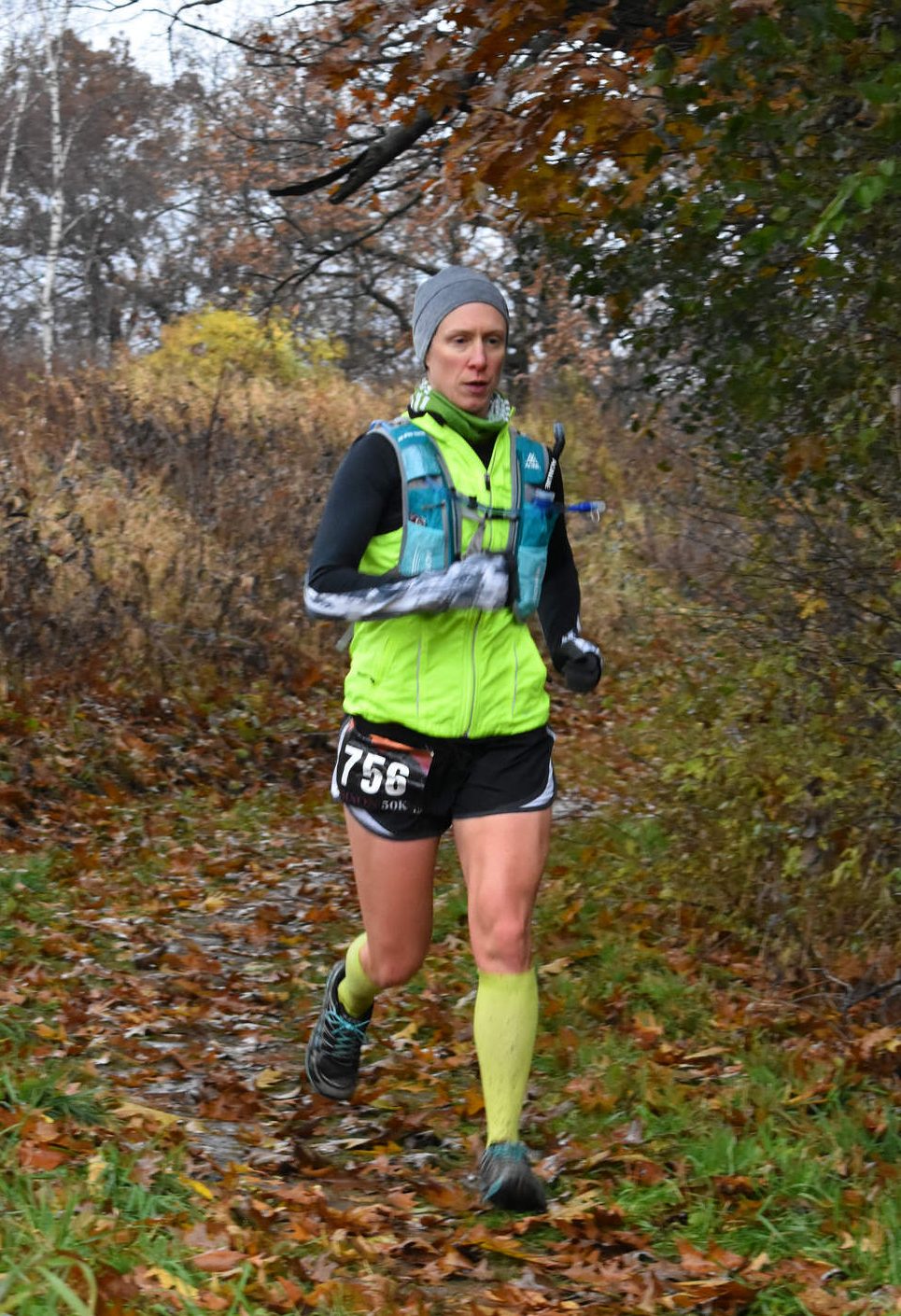
 I am an athlete. While I may no longer be on a team and I may no longer be able to catch or throw a ball to save my life (thanks to years of mostly just running), I am an athlete. I train hard and I push myself to the limit (less as I get older because sleep is nice) to see what my mind and my body can handle. I love a challenge and setting new goals helps me stay motivated. Though I am not on any official team, I am part of Oiselle Volée, a community of amazing women who love to run and to share miles and smiles with other women runners. I joined in April of 2016 and the support and sense of belonging I feel with the group has been so awesome, I will continue to renew my membership each year.
Aside from the fun and encouragement that comes with being part of the Volée, I have also loved meeting women with similar experiences in regards to disordered eating and weight loss. They understand the fine line between running for enjoyment and crossing that line into unhealthy behaviors. They know what it means to have your mind wage war against your body. While I am sure things were going on either on my high school team or in my conference, I was blissfully unaware at that time of how rampant eating disorders are in the running community.
This Blog post from the National Eating Disorders Association website speaks to the prevalence of these issues in runners, particularly long distance runners. I think runners just “get it” more than other athletes, with the exception of those participating in weight-biased or appearance-focused sports like wrestling, diving, gymnastics, or dancing. Statistics in these sports are also quite alarming. In my recovery from an eating disorder, it has been crucial to connect with women who have fought similar battles because they can offer support and understanding in a way that those who haven’t experienced an eating disorder cannot.
For these reasons, I sometimes attend a support group and I also share parts of myself through writing, hoping to reach others who may be struggling. I also like knowing I have people to hold me accountable when I need it. Inevitably, there are times when I need it. Recovery is not linear, nor is it a one and done thing. While I have only been admitted into a treatment program once, I have still struggled in the 2.5 years since then. The problem with eating disorders is, despite stereotypes, they can be an invisible illness. A person can appear perfectly healthy while being extremely unwell. This is why we must continue to have conversations about mental health so that we can reduce the stigma and help connect people with treatment and recovery resources when they need them.
I would like to share some things that have helped and continue to help me in my recovery and the opposite tends to lead to relapse or what I call pre-relapse behaviors:
1) Fighting diet culture– This means I do not like to talk about any sort of weight loss or diet regimen with others, not because I don’t want to support you in being healthy if that is how you choose to do it, but because it tends to lead me toward thoughts of my own weight and previous behaviors I used to control it. I like to listen to the Food Psych podcast by Christy Harrison, who is a Registered Dietitian and Social Justice Advocate. Really, she seems like someone I would love to have coffee with at some point. Give her a listen if you have any issues around food. Also, I pretty much eat the foods I want and try not to avoid any food groups (with the exception of meat, which is more for ethical and environmental reasons than dietary reasons). Restriction sends me down a bad path.
2) Not weighing myself– We do not keep a scale in our house and if I have to be weighed at the doctor’s office, I face away from the scale and ask them not to share the number with me (though you have to be careful of those fool printouts they give you after the appointments). While I have gotten better about recognizing it as “just a number,” there are days when that number can affect me more than others. Also, there is ample research to show that a person’s weight has very little to do with their health. Truly. See the website I’ve mentioned above for more information.
3) Socialization– This is the one I have struggled with the most. I am an extrovert and I love to be around people, but when I am feeling my worst, I tend to isolate myself or avoid being around people, which only makes this worse. Life circumstances have also made this difficult at times, as we have moved many times, so many of my friends live at least 30 minutes away, if not 2-3 hours away. In other places we’ve lived, I had play groups or family centers to attend, our church was in the town where we lived, or I was attending graduate school and seeing classmates on a regular basis. At this point in my life, none of those things are true. I was extremely sad and lonely when we first moved to Fort Atkinson. That has improved somewhat, but lately I have had days where I did not even want to run because I did not want to do it alone. The empty pavement can feel like a gaping hole that is going to swallow me up. So, I listen to podcasts or audiobooks and let the interviewers, guests, and characters keep me company. I make an effort to attend meet-ups when I can, but my location and my family schedule don’t allow for those things often.
Don’t get me wrong, this post is not a cry for help. I have been down this road before and I know how to navigate it. I know that I need to reach out and I need to focus on self-care, so please do not be concerned. I am simply sharing my heart in the hopes that someone reading this will learn something or find a shred of truth or strength to hold onto and keep fighting their own battles.

 Redefined Runner